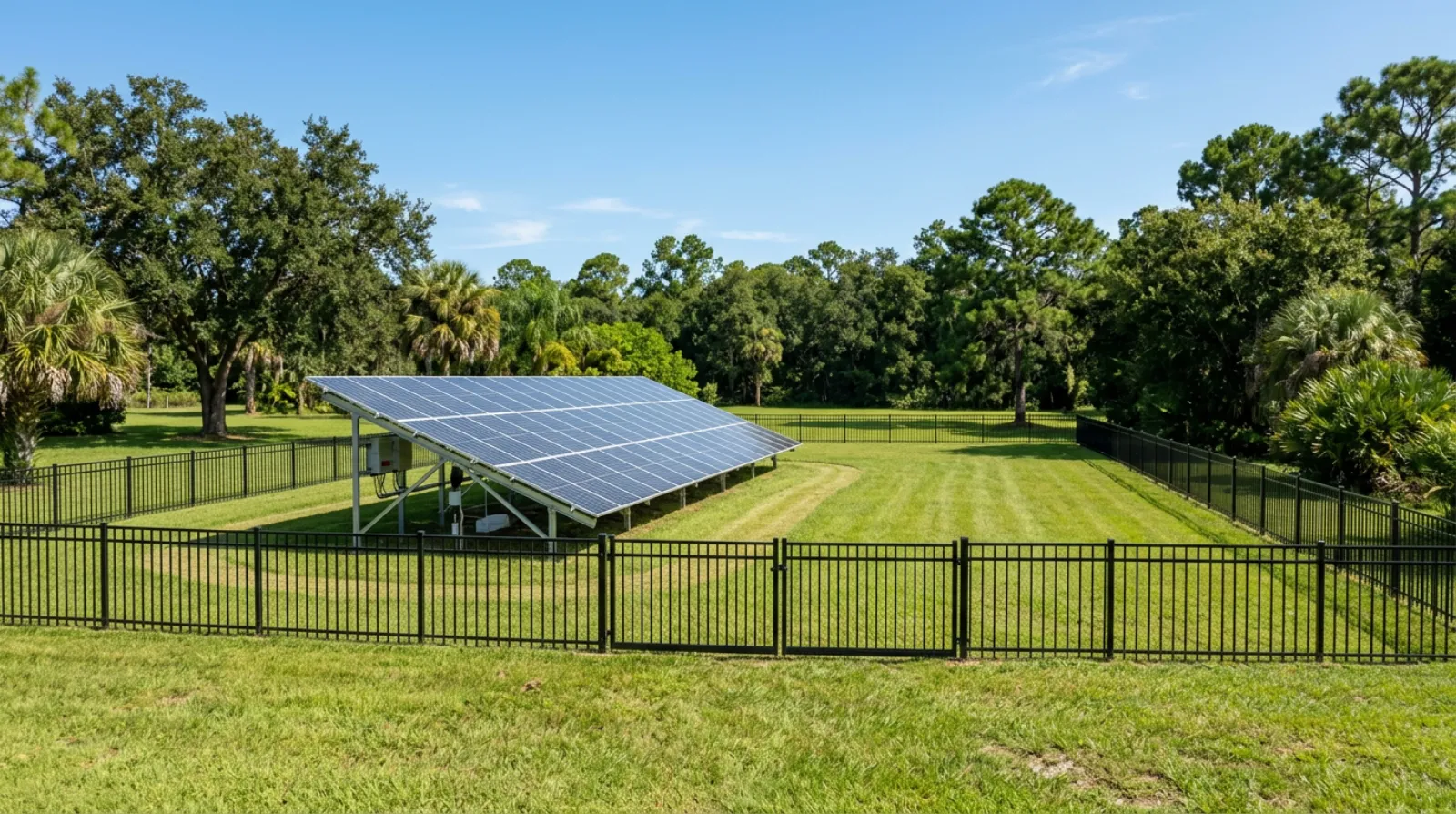
Acreage is a natural fit for ground-mounted solar, where photovoltaic racking stands directly on the ground instead of on a roof. In rural Hernando County, though, the array shares the land with animals, tractors and brush. Here's what to think about before you fence one in.
Animals are the main reason out here
Horses rub, goats climb and cattle lean. Any of them can damage racking or reach wiring on the back of the panels. Near livestock, the fence has to be built to hold that animal, not just to mark off the array. If you already have a pasture fence style you like, we can often extend it around the array so that everything matches.
Deer, hogs and smaller visitors
Larger wildlife is a fair reason to fence, but be realistic about what a fence does. Mesh at the bottom helps with hogs and armadillos. Very small animals still get through, so ask your installer about wire guards under the panels. Fencing and wire guards work together.
Don't shade your own power
It's easy to forget that a fence throws a shadow. In winter the sun is low, and even a few feet of shade along the bottom of a row can reduce output. Stick with open fence styles and keep the line back from the panels. Your solar company can tell you how much clearance your layout needs.
Getting equipment in and out
Plan the gate for the biggest thing that will need to reach the array, whether that's a service truck or a tractor with a mower deck. Keep a mowable strip inside the fence, because brush grows fast here and will shade the panels as surely as a fence will.
Before anyone digs
Buried solar wiring often runs a long way on rural property. Calling 811 is required, but utilities mark public lines, and private lines are the owner's responsibility according to Sunshine 811. Ask your installer for the as-built drawing. If there isn't one, a private locating company can help.
Rules and electrical questions
Whether a fence is required, and what type, can depend on the system and on local rules, so check with your solar installer and the building department. We keep the fence on its own posts, separate from the racking. If it's metal, ask your installer or an electrician whether it should be bonded or grounded.