There's no single right pasture fence. A paddock for a young horse, a long boundary line, and a pen for goats all ask different things of a fence. This overview walks through the main options we can build around Brooksville, and how to choose between them.
Start with the animal
Height comes first. University of Georgia Extension recommends a minimum of 5 feet for horse perimeter pasture fences, with dividing fences as low as 4.5 feet. For paddocks and pens, it suggests a top rail about 4 to 6 inches above the withers (UGA Extension, Fences for Horses). Young, tall or spirited horses can push those numbers up, so tell us who will be living behind it.
Horses also run into fences, lean over them and chew on them. Visible rails, no sharp wire ends, and nothing a hoof can get caught in matter more than they do with almost any other fence.
Hernando County acreage
Long fence lines change the math. On a few acres, the price per foot matters, and so does how much upkeep you're signing up for. A common approach is to use a nicer rail fence along the road and around the house and barn, then a practical mesh or wire fence for the back boundary. Sandy ground and low spots also affect post depth and placement, so we walk the line before we quote it.
3-rail and 4-rail black fences
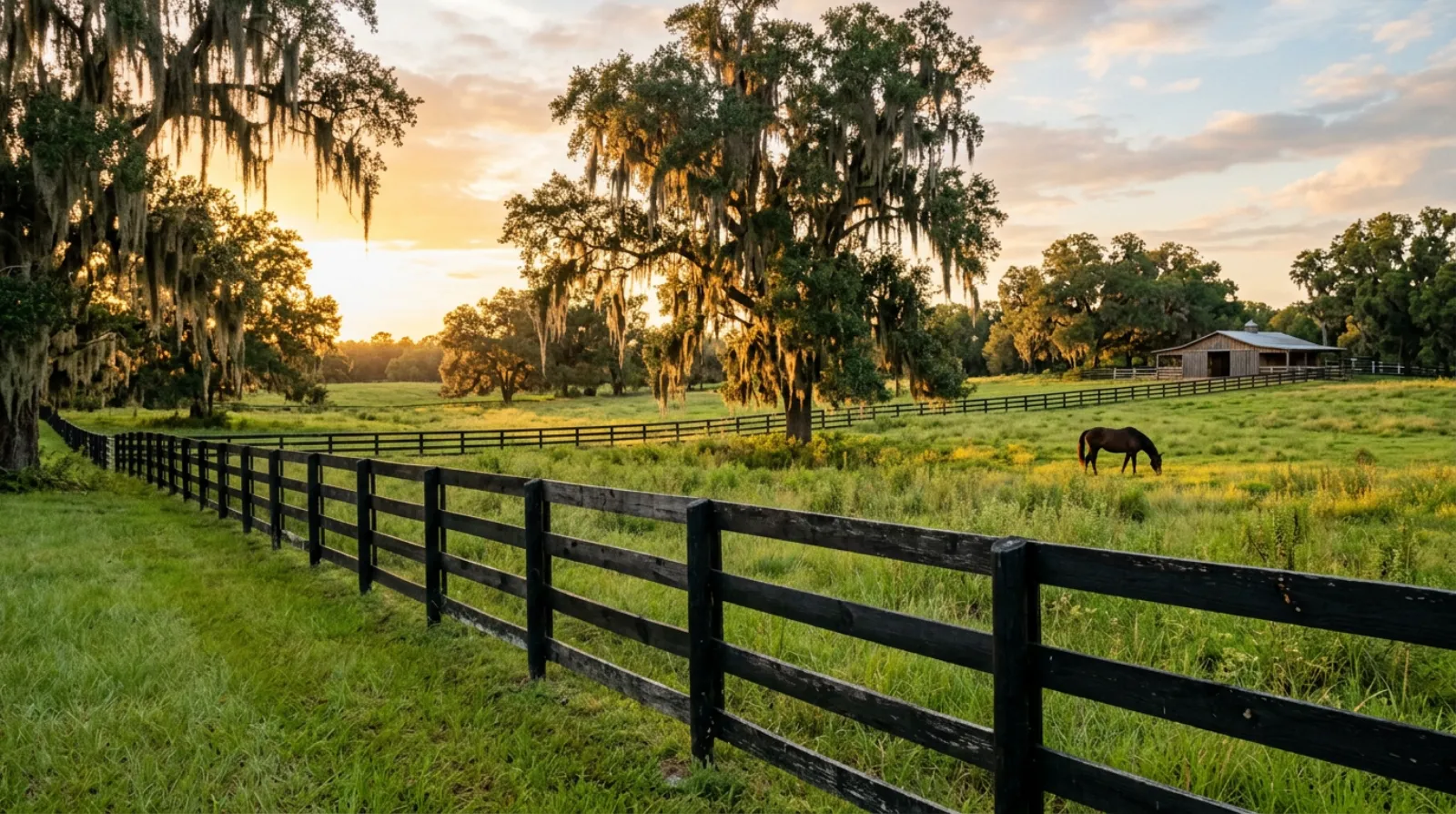
Black rail fencing is the classic farm look, and it hides dirt and wear well. Three rails suit open pastures and frontage. Four rails give you a tighter, taller fence, which helps with smaller animals, foals and busy paddocks. Boards need repainting over time to stay black, so plan on that upkeep.
Wood or vinyl
Wood board is strong and easy to repair one rail at a time, and you can stain or paint it to suit the property. Vinyl rail skips the painting and won't rot, and a washdown keeps it looking clean. Either one can have a mesh added on the inside if you need to keep smaller animals or dogs in.
Matching your stable
If you have a barn or stable, the fence should look like it belongs there. We can match its color and trim, repeat the rail count from an existing section, or carry a single style from the entrance through to the paddocks. Bring photos and we'll work out what fits the budget.
Sheep and goats
Goats treat most fences as a puzzle. A horse rail won't hold them, so sheep and goat fences use woven wire or mesh with small openings. UC Cooperative Extension advises at least 48 inches of height to stop animals climbing over (UC ANR). If predators are a concern, tell us, because that changes the mesh and may add a bottom strand.